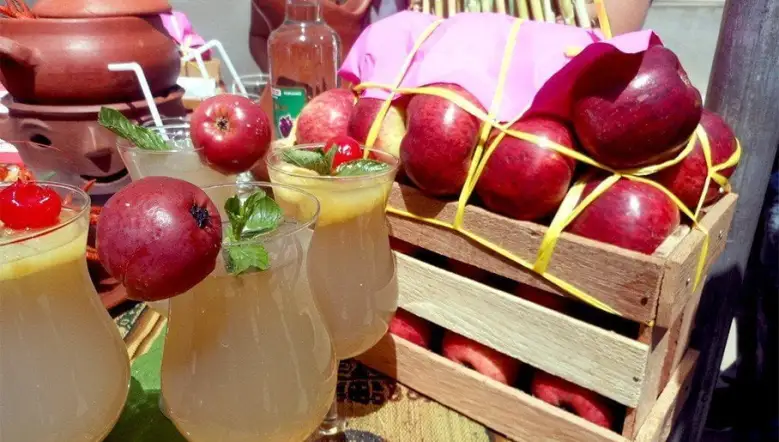
Peru is a country that takes its food seriously. From the ceviche of its Pacific coast to the quinoa of its Andean highlands and the exotic fruits of its Amazon basin, Peruvian gastronomy is among the most celebrated in the world. Yet within that extraordinary landscape of flavors, one fruit holds a place of quiet, enduring affection that no marketing campaign created and no trend has manufactured: the Manzana Delicia. It is not the rarest fruit in Peru, nor the most expensive. But it is, without question, one of the most loved — and understanding why reveals something true and important about the country itself.
A Fruit That Feels Like Home
In Peru, love for a food rarely comes from novelty. It comes from repetition, familiarity, and the warm associations built over a lifetime. The Manzana Delicia has been present in Peruvian households for decades, appearing in school lunchboxes, on market carts, at hospital bedsides, and in the fruit bowls of homes across every social class. For millions of Peruvians, it was likely one of the first fruits they ever tasted as children, and that early bond never fully disappears.
That quality of familiarity is not to be underestimated. In a country where imported fruits come and go with shifting trends, the Manzana Delicia has remained a constant. It does not need to compete on novelty because it has already won on something far more powerful: it feels like home. For many Peruvian families, reaching for a Delicia apple is not a conscious choice so much as a reflex, a gesture as natural and automatic as filling a glass of water.
The Power of That First Bite
Ask any Peruvian to describe the Manzana Delicia and the first word that almost always comes up is sweet. Not sharp, not complex, not sophisticated — simply, honestly sweet. That quality is not accidental. The Delicia apple is characterized by a sugar-forward flavor profile with minimal acidity, paired with a pleasant, slightly intense aroma that makes even the act of holding the apple an enjoyable sensory experience.
That sweetness is calibrated perfectly for the Peruvian palate. Unlike European apple traditions that prize tartness and vinous complexity, Peruvian consumers have historically shown a clear preference for fruits that are sweet, aromatic, and easy to eat without preparation. The Manzana Delicia delivers all three qualities simultaneously, which is why it has held its position as the preferred apple variety in Peru while more acidic or neutral varieties remain niche products for specific uses.
Its aroma amplifies the experience. A ripe Manzana Delicia releases a fragrance that is noticeably more intense than many other apple varieties, signaling ripeness and sweetness before the first bite is even taken. That aromatic quality adds a layer of pleasure that makes eating one feel like a small but genuine luxury, even when purchased for just a few soles at a neighborhood market stall.
A Fruit for Every Peruvian
One of the deepest reasons for the Manzana Delicia’s popularity is simply that everyone can afford it. In a country where economic inequality remains a significant challenge, food choices are often determined by budget as much as preference. The Manzana Delicia has consistently been one of the most accessible fruits in the Peruvian market, sold by the kilogram at prices that make it viable for working-class families, street vendors, school canteens, and urban households alike.
The availability of the “Kinder” or lunchbox-size format — smaller Delicia apples sold at reduced prices per kilogram — has made the fruit even more accessible for families who want to include fresh fruit in their children’s daily diet without stretching the household budget. This accessibility is not a coincidence but a direct result of the scale of production: with approximately 70% of Peru’s 11,000 apple-growing hectares dedicated to the Delicia variety, supply is abundant and prices remain stable.
That democratic accessibility has created something rare and valuable: a fruit that is genuinely beloved across all economic levels of Peruvian society. The Manzana Delicia does not carry the social weight of being a premium or luxury item, but neither is it seen as a poor-quality option. It is simply the apple — the default, the standard, the one that comes to mind first whenever someone in Peru thinks of eating fresh fruit.
The Valleys That Make It Possible
Behind every beloved product is a place that makes it possible, and the Manzana Delicia’s story is rooted in the valleys of the Lima region. Calango, Mala, Yauyos, Lurín, and Huarochirí form the geographic backbone of Peru’s apple-growing industry, and the Delicia has become synonymous with these places in the minds of many Peruvians.
Calango, a small district in the province of Cañete about 112 kilometers south of Lima, is widely recognized as the historical birthplace of the Peruvian Manzana Delicia. The Valle de Mala is remarkable for its capacity to produce apples throughout the entire year, ensuring that markets in Lima and beyond are never without a fresh supply. These geographical associations give the fruit a sense of provenance and regional identity that strengthens consumer loyalty.
Knowing where a fruit comes from deepens the emotional connection to it. Many Peruvians who grew up visiting relatives in Lima’s southern coastal valleys carry childhood memories of apple orchards, harvest seasons, and the pleasure of eating a Delicia freshly picked from the tree. Those memories become permanently attached to the fruit itself, traveling with consumers into city life and ensuring that affection for the Manzana Delicia is passed from one generation to the next.
Good for the Body, Easy on the Conscience
The Manzana Delicia’s popularity is also sustained by its reputation as a genuinely healthy food. Peruvian consumers are increasingly health-conscious, and the Delicia apple fits naturally into conversations about balanced nutrition, digestive wellness, and disease prevention.
Its rich content of pectin, dietary fiber, vitamin C, potassium, quercetin, and flavonoids connects it to a wide range of health benefits: cardiovascular protection, improved digestion, better blood sugar regulation, immune support, and even neuroprotective effects that may help reduce the risk of cognitive decline. These are not obscure scientific claims but widely shared nutritional facts that have become part of popular food culture in Peru, reinforced by health authorities, nutritionists, and public institutions like EsSalud and INACAL.
For parents choosing what to put in a child’s lunchbox, the Manzana Delicia hits every metric: it is sweet enough that children will actually eat it, portable and mess-free, nutritionally valuable, and inexpensive enough to include every day. That combination is practically impossible to beat among fresh fruits available in the Peruvian market.
A Fruit That Supports Real People
Beyond individual consumption, there is another layer to the Manzana Delicia’s popularity: people love it, in part, because it represents something worth supporting. The vast majority of Peru’s Delicia apples are grown by small and medium family farming operations in rural communities like Santa María de Huanchac in Huarochirí, where families have cultivated their orchards for generations.
Buying a Manzana Delicia is, whether consumers think about it consciously or not, an act of economic solidarity with those farming families. In an era where consumers worldwide are increasingly aware of the social impact of their food choices, the knowledge that Peru’s most beloved apple comes from small, family-run orchards rather than industrial corporations adds a moral dimension to its appeal. Eating a Manzana Delicia can feel, quietly and genuinely, like the right thing to do.
Versatile Enough for Every Occasion
Part of what makes a fruit truly beloved is its ability to fit into many different moments of daily life, and the Manzana Delicia excels at this. It is eaten fresh as a morning snack, packed into lunchboxes for school, offered as a simple dessert after dinner, blended into juices, sliced into salads, and even used by innovative Peruvian producers to craft artisan ciders with regional identity.
That versatility means the Manzana Delicia is never out of place. It belongs equally in a child’s hand on the way to school, on a market vendor’s cart in downtown Lima, on the menu of a health-focused restaurant, and in the fruit bowl of a family home in any of Peru’s cities or towns. That kind of universal presence is rare for any food, and it is a testament to how deeply the Delicia apple has woven itself into the fabric of Peruvian daily life.
A Symbol of Peruvian Agricultural Identity
At its deepest level, the Manzana Delicia is loved because it represents Peru. Not the Peru of high-end restaurants or export-oriented superfoods, but the Peru of family farms, river valleys, busy morning markets, and the everyday nourishment that sustains millions of ordinary lives. It is a fruit that was shaped by Peruvian geography, cultivated by Peruvian hands, perfected for the Peruvian palate, and distributed through a network of Peruvian producers, sellers, and consumers who have collectively made it what it is.
That is ultimately why no imported apple variety, regardless of its marketing budget or international prestige, has managed to displace the Manzana Delicia from its central place in Peru’s fruit culture. A Fuji or a Gala may offer technical complexity, but they cannot offer what the Delicia gives so effortlessly: a sense of belonging, familiarity, and honest sweetness that resonates with the experience of being Peruvian.
In a world that increasingly celebrates the exotic and the imported, the Manzana Delicia stands as a quiet but powerful reminder that the most beloved things are often those grown closest to home — tended by families who know the land, ripened under the Peruvian sun, and shared with a country that has never needed to be convinced to love them.