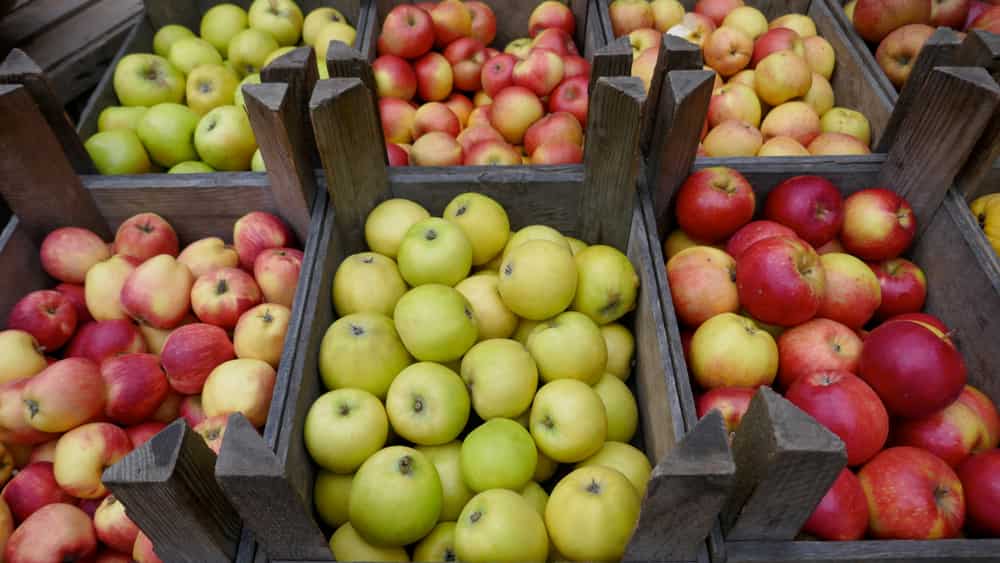
Walk into any supermarket or traditional market in Peru and you will immediately notice that not all apples are the same. Alongside the deep crimson Manzana Delicia, you will find the pale green Granny Smith, the speckled yellow-red Gala, the rosy Fuji, and the golden Israel — each one distinct in color, texture, flavor, and purpose. For many consumers, choosing between apple varieties comes down to habit or appearance. But understanding the real differences between these varieties transforms apple selection from a casual choice into a genuinely informed one.
This article breaks down how Peru’s beloved Manzana Delicia compares to the most widely available apple varieties in the Peruvian market and beyond — examining flavor, nutrition, texture, culinary use, origin, and why each one occupies a different place in the lives of consumers.
The Contenders: A Quick Introduction
Before diving into comparisons, it helps to briefly introduce each variety:
- Manzana Delicia (Red Delicious): Peru’s dominant variety, related to the internationally known Red Delicious, cultivated primarily in Lima’s valleys. Known for its deep red color, sweet low-acid flavor, and five-lobed shape.
- Manzana Israel (Granny Smith): A bright green, tart, firm apple widely cultivated in Peru’s highlands and Lima valleys alongside the Delicia.
- Manzana Gala: A medium-sized apple with a yellow-red striped skin, mild sweetness, and crisp texture, originally developed in New Zealand.
- Manzana Fuji: A Japanese-bred variety known for its exceptional sweetness, dense crispness, and long shelf life.
- Manzana Golden Delicious: A yellow-green variety with a mellow, honey-like sweetness and soft flesh, related to but distinct from Red Delicious.
Each of these varieties reaches Peruvian consumers through different channels — some grown domestically, others imported — and each serves a distinct role in the kitchen and at the table.
Flavor Profile: Sweet vs. Tart vs. Complex
Flavor is the most immediately noticeable difference between apple varieties, and here the contrasts are sharp and meaningful.
The Manzana Delicia is defined above all by its sweetness and low acidity. It has a clean, uncomplicated sweetness backed by an intense aroma, making it the most approachable apple for consumers who prefer fruit that is gentle, fragrant, and immediately pleasant. Its flavor profile is straightforward rather than complex — which is precisely why it has become the default everyday apple for millions of Peruvians.
The Manzana Israel (Granny Smith) sits at the opposite end of the flavor spectrum. It is notably tart, acidic, and crisp, with a brightness that the Delicia lacks entirely. That tartness makes it far less popular as a fresh snack in Peru but highly valued in cooking, baking, and cider production, where acidity provides structural contrast to sweet and rich flavors.
The Fuji apple occupies an interesting middle ground — it is very sweet, even sweeter than the Delicia by some measures, but also notably crisper and denser, with a slightly more complex flavor that includes subtle floral and honey notes. The Gala is mild and lightly sweet, less intense than both Fuji and Delicia, with a delicate flavor that works well in salads and light preparations but lacks the aromatic punch of Peru’s native favorite.
The Golden Delicious has a mellow, honey-like sweetness similar in some ways to the Delicia but with a softer flesh and more neutral aroma. It is widely used in baking and sauce-making because its flesh breaks down smoothly under heat.
Appearance and Physical Characteristics
Visual differences between apple varieties are among the most practical for consumers making quick market decisions.
The Manzana Delicia is one of the most visually distinctive apples in the world. Its deep, vivid red skin, five pronounced basal lobes, and elongated trapezoidal shape make it instantly recognizable even from a distance. Its skin tends to be smooth and shiny, and its large size — averaging 160 to 240 grams and 70 to 85 millimeters in diameter — gives it strong visual presence on any market display.
The Granny Smith (Israel) is the visual opposite: a bright, uniform green with no red coloring, smaller on average, with a rounder shape and a firmer, waxy skin. Its color alone signals tartness to experienced consumers. The Gala presents a characteristic yellow base with orange-red stripes, giving it a warm, appealing appearance that performs well in retail settings. The Fuji ranges from green-yellow to pinkish-red with subtle striping, and its skin is generally thin and smooth. The Golden Delicious is a pale greenish-yellow, becoming more golden as it ripens, with a smooth, thin skin and no red coloring.
In terms of pure visual impact and market appeal, the Manzana Delicia’s deep red color and large size give it the strongest presence — which is one of the reasons it continues to dominate Peru’s apple displays despite the availability of competing varieties.
Texture: From Crisp to Soft
Texture is a key factor in both eating enjoyment and culinary application, and the apple varieties available in Peru span a wide textural range.
The Manzana Delicia has a texture that can vary from moderately crisp when freshly harvested to somewhat softer and slightly grainy as it approaches full ripeness. That softer quality is a characteristic that some consumers love — it makes the fruit easier to eat for children and older adults — while others prefer crispier varieties.
The Fuji is consistently the crispest and densest of the common varieties, maintaining its firm texture even as it ripens. The Granny Smith is equally firm and crisp, with a snap-like quality when bitten that contrasts dramatically with the Delicia’s softer flesh. The Gala offers a pleasant medium crispness — firm enough to be satisfying but not as dense as Fuji or Israel. The Golden Delicious has the softest texture of the group, with a fine-grained, melt-in-the-mouth quality that makes it the preferred choice for applesauce and purees.
Nutritional Comparison
All apple varieties share broadly similar nutritional profiles because they belong to the same species, but meaningful differences exist in their concentrations of specific bioactive compounds.
The Manzana Delicia scores particularly well in antioxidant content, with research suggesting that Red Delicious varieties contain some of the highest levels of quercetin, catechins, and flavonoids among commonly available apples. These polyphenols are concentrated primarily in the skin, and because the Delicia has a thick, pigment-rich skin, consuming it with the peel delivers a meaningful dose of these protective compounds.
The Granny Smith (Israel) has been noted for its relatively high malic acid content, which contributes to digestive support and is the primary source of its characteristic tartness. The Fuji is particularly high in natural fructose, making it the sweetest variety by sugar content but also the one with the highest glycemic impact among the group. The Gala and Golden Delicious fall in the middle ranges across most nutritional metrics — solid performers without standout advantages in any particular category.
In terms of fiber and pectin, all varieties deliver similar quantities per 100 grams, though the Delicia’s thicker skin means consuming it whole provides a slightly higher phenolic and fiber contribution per gram of fruit.
Culinary Uses: Where Each Variety Shines
Understanding which apple variety suits which culinary purpose is practical knowledge that transforms cooking results.
The Manzana Delicia is at its absolute best when eaten fresh and raw. Its sweetness and aroma shine without heat, and its soft texture becomes an asset when eating out of hand. For juicing, it produces a naturally sweet, low-acid juice that requires no sugar addition. It works well in fresh fruit salads, compotes prepared with minimal cooking time, and modern Peruvian dishes where its sweetness contrasts savory elements. Where it underperforms slightly is in long baking applications, where its softer flesh can break down too completely, losing structural integrity.
The Granny Smith (Israel) is the baker’s apple of choice in Peru and globally. Its high acidity and firm texture mean it holds its shape under heat, making it ideal for pies, tarts, strudels, and chutneys where chunks of apple need to maintain definition. It is also the preferred variety for Peruvian artisan cider production precisely because its acidity gives fermented beverages structural backbone.
The Fuji is versatile — excellent fresh, good in salads, and functional in baking — but its very high sugar content means cooked preparations can become cloyingly sweet without acidic balance. It performs best in raw applications where its crispness and sweetness can be appreciated directly.
The Gala is perhaps the most universally versatile apple, performing reasonably well fresh, in light cooking, and in salads, without excelling dramatically in any single application. Its mild flavor makes it a good canvas for spiced preparations where the apple should support rather than dominate.
The Golden Delicious is the puree and sauce specialist — its soft flesh, mellow sweetness, and ability to break down smoothly make it the top choice for applesauce, baby food, smooth compotes, and apple butter.
Price, Availability, and Market Position in Peru
In the Peruvian market context, these varieties occupy very different commercial positions.
The Manzana Delicia is by far the most widely available and most affordable apple in Peru, accounting for approximately 70% of the country’s 11,000 apple-growing hectares. It is the default apple at every market level, from wholesale fruit markets to neighborhood stalls to supermarket chains. Its domestic production keeps prices accessible and supply consistent throughout the year.
The Manzana Israel is the second most cultivated variety domestically in Peru, widely available but generally positioned slightly below the Delicia in terms of consumer preference for fresh eating. The Fuji, Gala, and other imported or specialty varieties tend to carry a price premium in Peruvian supermarkets, reflecting their import costs or smaller domestic production volumes. This price differential means that for most everyday Peruvian consumers, the Manzana Delicia remains the rational as well as the emotional first choice.
Which Apple Is Right for You?
The answer depends entirely on how you plan to eat or use it:
- For fresh snacking and daily consumption: Manzana Delicia wins on sweetness, aroma, accessibility, and price
- For baking, pies, and hot preparations: Manzana Israel (Granny Smith) is the superior choice for its structural integrity and acidity
- For maximum crispness and dense texture: Fuji delivers the firmest, most satisfying bite
- For smooth sauces, purees, and baby food: Golden Delicious breaks down most beautifully
- For versatile everyday use across multiple applications: Gala offers reliable performance across contexts
- For artisan cider and fermented beverages: A blend of Delicia and Israel, as Peruvian producers have discovered, offers the best of both sweetness and acidity
The Manzana Delicia does not win every category, but it wins the category that matters most to the greatest number of people: the simple, daily pleasure of eating a sweet, fragrant, beautiful apple exactly as nature grew it. In that category, it has no real competition in Peru — and likely never will.