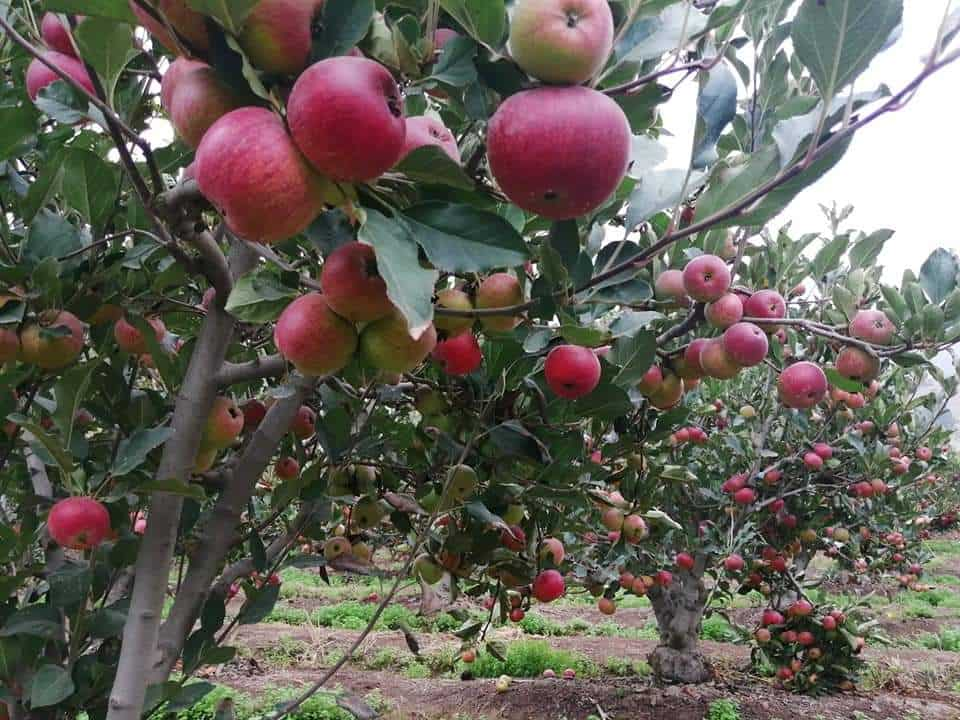
Peru’s agricultural landscape is one of extraordinary diversity. From the coastal desert strips where asparagus and grapes thrive under intense sun, to the high Andean valleys where quinoa and potatoes have fed civilizations for millennia, the country’s farming heritage is both ancient and continuously evolving. Within that landscape, one fruit has carved out a quietly dominant position that most people overlook precisely because it is so familiar: the Manzana Delicia. Sweet, red, and deeply embedded in daily Peruvian life, this apple variety is far more than a popular snack. It is a pillar of regional agriculture, a source of livelihood for thousands of farming families, and a case study in both the potential and the challenges of building a sustainable domestic fruit industry.
A Crop That Defines an Entire Region
To understand the Manzana Delicia’s agricultural importance, you first need to understand the geographic concentration of its production. According to Peru’s national standards body INACAL, using data from the National Fruit Program of Sierra Exportadora, Peru cultivates approximately 11,000 hectares of apples, and a remarkable 70% of that total area is dedicated to the Delicia variety. The remaining 30% is distributed among Israel, Winter, and San Antonio varieties.
That 70% figure is not simply a market share statistic — it represents a structural commitment by Peru’s farming communities to a single variety that has proven commercially reliable, climatically suitable, and consumer-preferred over decades. Apple production is concentrated approximately 90% within the Lima region, with smaller contributions from Ancash, La Libertad, Arequipa, and Ica. Within Lima, the districts of Calango, Mala, Yauyos, Lurín, and Huarochirí form the geographic core of the national Manzana Delicia industry.
This geographic concentration creates both strengths and vulnerabilities. On one hand, it enables shared infrastructure, accumulated local expertise, and strong regional identity around the product. On the other, it means that climatic disruptions, market fluctuations, or transport challenges in the Lima region can have disproportionate national consequences for supply and pricing.
The Backbone of Family Farming Communities
The economic story of the Manzana Delicia is inseparable from the story of small and medium family farming operations that produce the vast majority of Peru’s apple output. Unlike many export-oriented agricultural products dominated by large agribusiness companies, the Manzana Delicia supply chain begins overwhelmingly with individual farming families who own and manage their own parcels of land.
In communities like Churacocha in the province of Huarochirí, producer associations such as the Asociación de Productores Agropecuarios y Agroindustriales de Churacocha represent the organizational model through which small farmers pool resources, negotiate better input prices, and collectively supply wholesale markets in Lima. According to a business plan supported by Agrobanco, these producers supply approximately 250 crates of apples (4.5 tons) to the markets of Cañete and Lima, with expansion targets that reflect growing demand.
Similarly, in Yauyos, the Asociación de Productores Agropecuarios del distrito de San Pedro de Quinovay has worked with government support to modernize its production practices and improve commercial positioning. A project executed by the Ministry of Agriculture and Irrigation (MINAGRI) through the National Institute of Agrarian Innovation (INIA) helped these producers increase yields and negotiate better prices, demonstrating the direct connection between agricultural innovation investment and rural economic improvement.
Productivity: What the Numbers Show
Raw production area is only part of the economic picture. Productivity per hectare determines how efficiently each farming family converts land and labor into income. Traditional Manzana Delicia cultivation in Peru has historically operated at relatively modest yield levels, constrained by limited access to modern irrigation, inconsistent fertilization practices, and inadequate pest management.
However, targeted innovation projects have demonstrated what is possible when farmers receive proper technical support. A PNIA-funded project in Yauyos successfully increased average yields from 8 to 10.5 tonnes per hectare through optimized fertilization, improved cultural practices, integrated pest and disease management, and innovations in irrigation efficiency including mulch techniques, level furrows, and micro-reservoirs.
That same project reduced post-harvest losses from 20% to 12% — a significant improvement given that in small farming operations, every kilogram of lost fruit represents direct income reduction. Farmers in the program also signed weekly supply contracts of 500 to 800 kilograms with established buyers during peak production season (September to December), providing income stability that was previously unavailable. Critically, better supply organization also allowed producers to improve their commercial price by 20% — a meaningful income boost for families whose margins are often thin.
The Commercial Chain: From Farm Gate to Market
The commercial pathway of the Manzana Delicia from farm to consumer is one of the most important — and most discussed — structural issues in Peru’s apple industry. The chain typically moves from small producer → local intermediary → regional wholesaler → Lima wholesale market → retailer → consumer, with each link in the chain capturing a portion of the margin.
Academic research from Peru’s leading universities has identified a fundamental problem in this structure: the first link in the chain — the farmer — consistently captures the smallest share of the final consumer price. A strategic planning study from the PUCP noted that Peru’s apple production chain lacks integration, with intermediaries and wholesalers holding disproportionate pricing power relative to producers. This imbalance leaves farming families with income levels that struggle to justify continued investment in orchard maintenance and improvement.
The major wholesale markets in Lima — including Mercado Mayorista de Frutas N°2 — handle enormous volumes of Manzana Delicia annually. According to MINAGRI-SISAP data cited in the Churacocha business plan, wholesale distributors serving this market demand approximately 34,517 tonnes of Manzana Delicia annually, reflecting the sheer scale of Lima’s consumption. That figure underscores just how significant the domestic demand base for this fruit truly is.
A Negative Trade Balance: The Import Challenge
One of the most revealing economic indicators of the Manzana Delicia’s position in Peru’s agricultural economy is the country’s apple trade balance. Despite the scale of domestic production and the Delicia’s dominant share of cultivated area, Peru remains a net importer of apples.
Peru spends approximately USD 48 million annually importing apples, primarily from Chile, reflecting a significant unmet domestic demand that local production has not yet been able to fully satisfy. This import dependency represents both a challenge and an opportunity: the domestic market is clearly large enough to absorb significantly more locally produced Manzana Delicia if productivity, quality, and supply chain efficiency can be improved.
The fact that apple production increased by approximately 20% between 2011 and the mid-2010s — driven partly by growing demand from Peru’s celebrated restaurant and gastronomy sector — shows that the market responds positively to quality improvements and volume expansion. The continued growth of Peru’s food service industry and the increasing consumer interest in fresh, domestically grown produce create a genuinely favorable environment for further Manzana Delicia production growth.
Government Investment and Institutional Support
Recognizing both the economic importance of the Manzana Delicia and the structural challenges facing its producers, various Peruvian government institutions have invested in the sector. The Ministry of Agriculture (MINAGRI), through the INIA and its PNIA program, has funded technical assistance projects in key growing districts like Yauyos, financing irrigation infrastructure, demonstration plots, good agricultural practice training, and farm management capacity building.
The PNIA project in San Pedro de Quinovay, with a total investment of S/ 243,976, benefited 50 producers and demonstrated measurable improvements in yield, loss reduction, and commercial price — a strong return on a relatively modest public investment. Meanwhile, INACAL has worked to establish and promote national quality standards for the Manzana Delicia, including Category I specifications for size, weight, color, and surface condition, which help producers access premium retail channels and potentially export markets.
Agrobanco, Peru’s agricultural development bank, has provided co-financing to producer associations like the one in Churacocha, with approved funding of S/ 358,000 directed toward improving productive capacity, equipment acquisition, and market access. These institutional support mechanisms, while not yet available to every producer, represent a growing recognition that the Manzana Delicia sector requires coordinated investment to unlock its full economic potential.
The Export Opportunity: Untapped Potential
Peru’s Manzana Delicia has historically been almost entirely a domestic market product, with export volumes remaining negligible. Data from 2012 showed Peru exporting just 1,667 kilograms of apple to Ecuador for a value of approximately USD 691 — a figure so small it barely registers in the context of a national industry producing tens of thousands of tonnes.
However, strategic planning research identifies export development as one of the most promising long-term growth paths for Peru’s apple industry. The country’s unique agricultural advantage — the ability to produce Manzana Delicia year-round due to the Valle de Mala’s favorable conditions and the use of chemical defoliation techniques to manage production cycles — means Peru can supply fresh apples during windows when major producers like Chile, the United States, and China are between harvests.
That counter-seasonal production capacity is a genuine competitive advantage in global fruit markets, where buyers in Asia, the Middle East, and parts of Latin America are actively seeking reliable year-round fresh apple supply. Realizing this export potential requires investment in post-harvest handling, cold chain logistics, quality certification, and the kind of brand-building that transforms a domestically beloved fruit into an internationally recognized Peruvian product.
Challenges That Cannot Be Ignored
Honest assessment of the Manzana Delicia’s economic role requires acknowledging the sector’s significant challenges. The fragmented production structure — thousands of small, often unconnected family farms with limited market access — makes it difficult to achieve the consistency, volume, and logistics efficiency that major buyers require. High transport costs from remote growing areas like Huarochirí to Lima’s markets reduce producer margins and create logistical barriers to market expansion.
The non-integrated supply chain, in which intermediaries capture value at the expense of producers, continues to undermine farmer motivation and investment. Without stronger associations, better market intelligence, and fairer commercial relationships, many farmers face the difficult decision of whether continued Manzana Delicia cultivation is worth the effort. Academic research warns that without strategic intervention, producer motivation will continue declining, threatening the long-term sustainability of this culturally and economically important crop.
A Fruit Worth Investing In
The Manzana Delicia is not just Peru’s most consumed apple — it is one of the country’s most important domestic agricultural products, supporting the livelihoods of thousands of farming families, anchoring the economies of entire valleys in the Lima region, and feeding millions of consumers daily at accessible prices. Its economic story is one of genuine importance and significant unrealized potential.
Closing the gap between where the Manzana Delicia industry stands today and where it could be — in terms of productivity, supply chain fairness, quality standards, and export development — requires sustained commitment from farmers, government, financial institutions, and the consumers who choose it every day. Every Manzana Delicia purchased at a Lima market is, in a very real sense, a vote for the rural communities and farming families who make it possible.