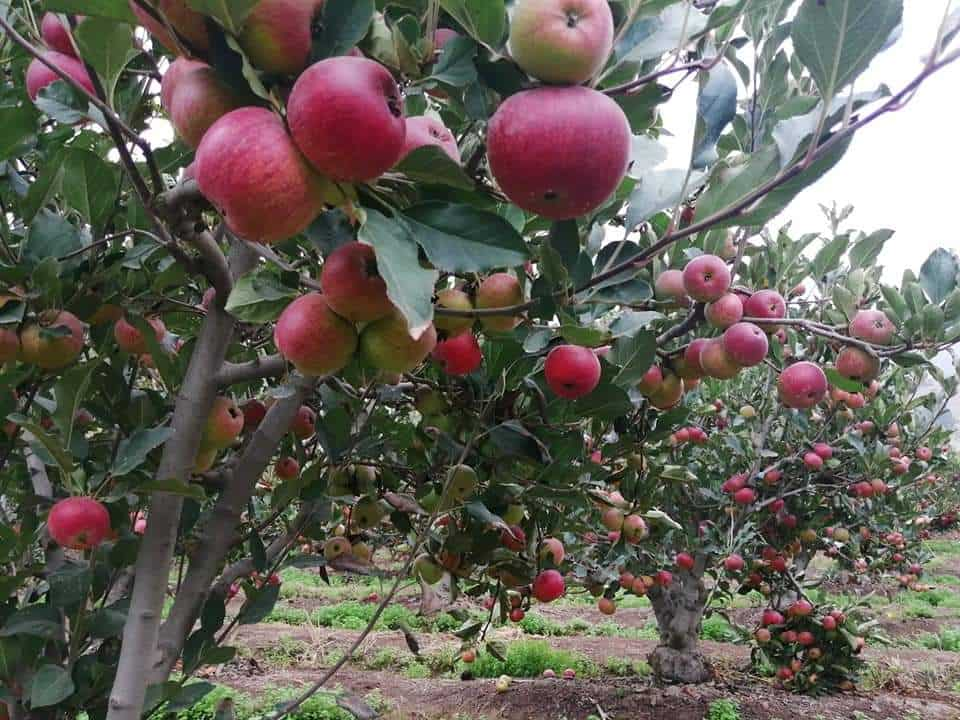
Few fruits tell a more grounded story than the Manzana Delicia. While it sits quietly in market stalls and lunchboxes across Peru, behind every single apple lies a carefully managed journey — from the terraced hillsides of Andean valleys to the hands of the families who harvest it, sort it, and send it out to millions of consumers. Understanding how the Manzana Delicia is grown in Peru is not just an exercise in agricultural knowledge; it is a window into the country’s farming traditions, rural communities, and deep relationship with the land.
The Land That Makes It Possible
The first and most essential ingredient in any great apple is the right growing environment, and Peru’s Manzana Delicia has found it in the valleys of the Lima region. The primary cultivation zones stretch across Calango, Mala, Yauyos, Lurín, and Huarochirí — districts where the combination of altitude, river access, mild temperatures, and well-drained soils creates ideal conditions for apple trees to thrive.
Calango, in the province of Cañete approximately 112 kilometers south of Lima along the Mala River, is regarded as the historical heart of Manzana Delicia production in Peru. The road from Mala winds 24 kilometers through Andean terrain to reach this small, productive district, where apple orchards line the slopes and the air carries the faint fragrance of ripening fruit during harvest season.
The Valle de Mala deserves special mention because of its remarkable agricultural consistency. Unlike many fruit-growing zones where production is limited to specific seasons, the Valle de Mala benefits from conditions that allow apple cultivation throughout the entire year, meaning fresh Manzana Delicia is almost always available for Lima’s markets regardless of the calendar month. This year-round production capacity makes it one of the most strategically important growing areas in the country.
The Role of Family Farming
The Manzana Delicia is fundamentally a family farm crop in Peru. Unlike industrial monoculture systems common in large apple-producing countries, the majority of Peru’s Delicia orchards are managed by small and medium family farming operations, where several generations of the same family may be involved in planting, caring for, and harvesting the trees.
In communities like Santa María de Huanchac, in the district of San Lorenzo de Quinti within Huarochirí province, family farming enterprises have developed professional approaches to apple cultivation while maintaining a deeply personal connection to their land. Organizations like BIDFRUT in this area represent a model that blends ancestral farming knowledge with modern agricultural management, producing high-quality Manzana Delicia that meets technical standards for commercial distribution.
This family farming model has important social and economic implications. Apple orchards in these communities represent the primary source of income for many households, and the cultivation of Manzana Delicia supports not just individual families but entire rural economies, funding education, infrastructure, and local commerce. When a consumer buys a bag of Manzana Delicia at a Lima market, they are in many cases directly supporting this web of small-scale producers.
Planting and Tree Management
Apple trees used in Manzana Delicia production are typically grown from grafted rootstocks, a technique that ensures the desirable characteristics of the Red Delicious variety — its color, flavor, shape, and size — are consistently reproduced across generations of trees. Grafting also allows farmers to control tree size and root vigor, adapting the plant to specific soil conditions in each valley.
Young trees require a period of several years before they reach full productive maturity. During this time, farmers must manage irrigation carefully, as the apple tree demands consistent moisture without waterlogging. The river valleys of Mala and Cañete provide natural water channels that make irrigation management more accessible, allowing growers to maintain steady hydration for their orchards through both dry and rainy seasons.
Pruning is one of the most critical and labor-intensive aspects of apple tree management. Peruvian farmers prune their Delicia trees regularly to control growth, improve light penetration into the canopy, promote healthy flowering, and ensure that energy is directed toward producing fewer but larger, higher-quality fruits. Skilled pruning is often considered an art form passed down within farming families, as improper cuts can damage tree health and reduce yields for multiple seasons.
Flowering, Pollination, and Fruit Development
The flowering stage is a critical moment in the Manzana Delicia production cycle. Apple trees are not self-pollinating, meaning they require cross-pollination from other apple varieties or the same variety from different trees to produce fruit successfully. In Peruvian orchards, this is managed by planting compatible varieties nearby and, in many cases, by maintaining bee populations in and around the orchards.
Once pollination occurs, the fruit begins its development cycle, which can take several months depending on altitude, temperature, and farming practices. During this period, the characteristic deep red coloration of the Manzana Delicia develops gradually as the fruit responds to sunlight exposure and temperature variations between day and night. Growers in higher-altitude zones like Huarochirí often benefit from greater temperature fluctuations, which enhance color development and sugar concentration, producing apples with deeper color and more intense sweetness.
Thinning — the deliberate removal of some developing fruits from each branch — is a practice many experienced Manzana Delicia farmers apply to redirect the tree’s nutrients toward fewer fruits, resulting in larger, heavier apples that meet Category I quality standards. This labor-intensive step significantly improves the commercial value of the harvest.
Pest and Disease Management
Like all fruit crops, the Manzana Delicia faces threats from pests and diseases that farmers must manage carefully to protect yields and fruit quality. Common challenges in Peruvian apple orchards include fungal infections, particularly in wetter seasons, as well as insect pests that can damage fruit skin and create entry points for rot.
Farmers in sustainable operations increasingly apply integrated pest management (IPM) strategies, combining physical barriers, biological controls, and targeted minimal use of agrochemicals to protect their crops. Operations like BIDFRUT in Huarochirí are notable for their emphasis on clean production practices, prioritizing the health of both the fruit and the surrounding ecosystem. These efforts reflect a growing awareness within Peru’s apple farming community that sustainable production is not only an ethical choice but also a commercial advantage, particularly as consumer demand for clean, chemical-free produce grows.
Quality control measures, including those outlined by Peru’s national standards body INACAL, require that Category I Manzana Delicia fruits be free from pests, abnormal bruising, rot, excessive moisture, and chemical residues — standards that responsible producers in valleys like Mala and Calango work hard to meet consistently.
Harvest: The Most Anticipated Moment
Harvest season for the Manzana Delicia is the culmination of months of careful work, and in the Valle de Mala and surrounding areas it can occur at multiple points throughout the year due to the zone’s favorable year-round conditions. In higher-altitude areas like Huarochirí, harvest is more seasonal, typically concentrated in the cooler months when the fruit has had maximum time to develop its sugars, color, and aroma.
Harvesting is almost entirely done by hand in Peru’s family farming operations. Workers move carefully through the orchards, selecting apples that have reached the right size, color, and firmness while leaving underripe fruit on the tree for later picking. This selective hand-harvesting approach is slower than mechanical methods but results in significantly less bruising and better overall fruit quality.
Freshly harvested Manzana Delicia apples are collected in padded containers and brought to sorting and grading stations on or near the farm. Here, workers classify the fruit by size, weight, color intensity, and surface condition into commercial categories. Category I apples — the largest, most uniformly colored, and blemish-free examples — are destined for supermarkets and premium retail channels, while smaller or slightly imperfect fruits may go to local markets, juiceries, or processing operations.
Post-Harvest Handling and Distribution
After grading, the apples enter a cold chain management process to preserve freshness during transport. Refrigerated storage slows the natural ripening process, extending shelf life and ensuring that apples arriving at Lima’s wholesale markets or supermarket distribution centers maintain the quality and aroma that consumers expect.
The distribution network for Manzana Delicia in Peru is extensive and well-established. Major wholesale markets in Lima, including La Parada and the Mercado Mayorista de Frutas, receive regular shipments from the producing valleys, and from there the apples flow outward to neighborhood markets, supermarket chains like Metro and Wong, specialty produce retailers, online delivery platforms, and institutional buyers including schools and hospitals.
The “Kinder” or lunchbox-sized format — smaller Manzana Delicia apples sold by the kilogram at accessible prices — has become especially popular with urban families, reflecting how well the fruit fits into everyday routines. This size-specific packaging strategy shows that Peruvian apple producers have become increasingly sophisticated in understanding their market and adapting their post-harvest offer accordingly.
From Valley to Table: A Chain Worth Honoring
The journey of a Manzana Delicia — from a grafted sapling in a Calango orchard to a crisp, aromatic apple on a Lima dining table — represents one of Peru’s most complete and human agricultural stories. It passes through the hands of farmers who prune by memory, harvesters who select by eye, and sorters who grade by touch, before traveling roads carved through Andean landscapes to reach consumers who may never think about where it came from.
Understanding that journey changes the experience of eating this fruit. The Manzana Delicia is not just a sweet, red apple at the bottom of a shopping bag. It is the product of generations of farming knowledge, geographic advantage, family dedication, and rural resilience — grown in some of Peru’s most beautiful valleys and offered to consumers at a price that makes it accessible to virtually every household in the country.
The next time you pick one up, the sweetness you taste carries all of that with it.